
In a December 2025 article, Nature described the cutting-edge research performed through the Collaborative Influenza Vaccine Innovation Centers (CIVICs) to develop a universal influenza vaccine. The article highlighted strategies employed by each Vaccine Center to achieve long-lasting, broadly protective immunity, emphasizing the importance of complementary approaches and collaboration.
Twice each year, the World Health Organization (WHO) recommends representative influenza strains to include in annual seasonal vaccines. Constant evolution via genetic mutations makes it difficult to predict which viral strain to vaccinate against, resulting in occasional mismatches between the selected vaccine strains and circulating infectious strains. Such a mismatch occurred in 2014 when a last-minute shift in circulating strains reduced vaccine effectiveness and led to a severe and prolonged flu season. Scientists around the world, including investigators in the CIVICs program, are working to develop a universal influenza vaccine that could provide broad, lasting protection and circumvent these challenges.
SEM CIVIC: Targeting the HA Stalk for Broad Immunity
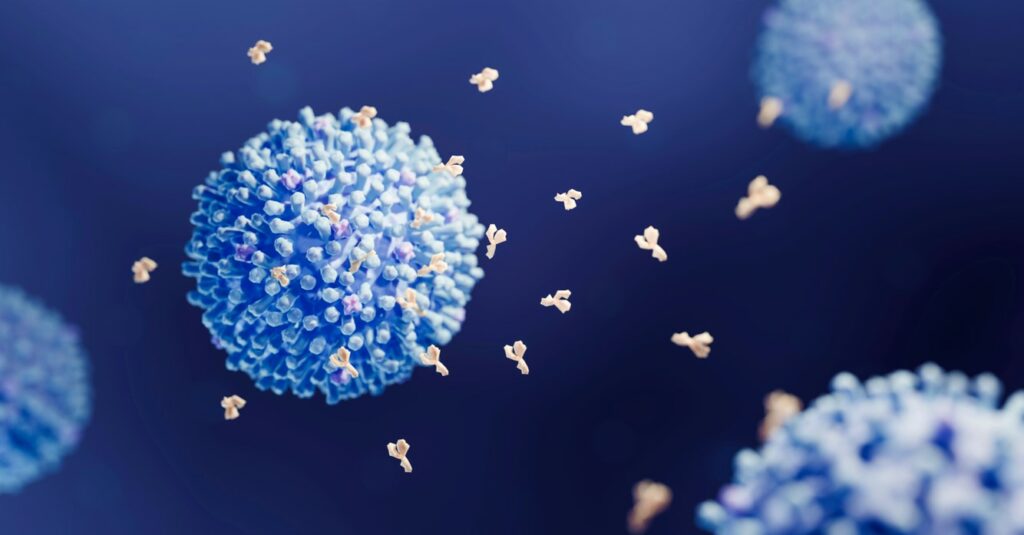
Dr. Florian Krammer, Principal Investigator of the Sinai-Emory Multi-Institutional Collaborative Influenza Vaccine Innovation Center (SEM CIVIC), is leading efforts to train the immune system to recognize the stalk of influenza’s hemagglutinin (HA) protein. Unlike the head of the HA protein, the stalk is more similar or “conserved” across many influenza strains. A vaccine that focuses immune responses on this region could provide broad immunity against multiple influenza viruses. Additionally, because the stalk is less prone to mutations than the head of the HA protein, these vaccine viruses will be less likely to escape the immune system’s defenses, resulting in longer-lasting immunity. Early clinical trials show encouraging increases in antibodies against an H1 subtype stalk, offering hope for a more universally protective vaccine.
DCVC: Gene Editing to Stimulate Stalk Responses
Dr. Nicholas Heaton’s group from Duke CIVIC Vaccine Center (DCVC) applied gene editing to change the head of HA proteins to redirect the immune system’s attention to the stalk region. This approach provides a significant increase in stalk antibodies in ferrets and mice. The modified HA proteins are paired with particles that stimulate the usual response to the head region, allowing the immune system to recognize multiple parts of an influenza virus and achieve broader immunity. While the stalk antibodies do not neutralize the virus directly, they help the immune system recognize and clear the virus faster, lessening illness severity.
CIVR-HRP: Predicting Viral Evolution with Computational Modeling
Dr. Ted Ross, Principal Investigator of the Center for Influenza Vaccine Research for High-Risk Populations (CIVR-HRP), uses computational modeling to design broadly protective vaccines. His team uses the COBRA (Computationally Optimized Broadly Reactive Antigen) system to identify viral sequences that rarely mutate for better vaccine targets. Machine learning models simulate how those sequences may change to evade immune responses. With this analysis, the team can anticipate viral evolution in future seasons and design COBRA vaccines to help the immune system “outsmart” the virus as it evolves, providing long-lasting protection.
CIVICs Collaboration for a Universal Influenza Vaccine
While a universal flu shot remains elusive, the collective work of CIVICs investigators has driven steady and impactful progress. By using innovative approaches to focus on stable regions of the virus, investigators are laying the groundwork for vaccines that could improve immune protection against a broad spectrum of flu strains that remains effective year after year. The investigators noted it is unlikely a single approach will address all limitations of currently licensed influenza vaccine design and manufacturing practices, emphasizing the importance of the CIVICs program in funding many avenues of research and promoting collaboration across the field. While challenges remain, results in animal studies and early clinical trials offer hope for a more robust influenza vaccine.
Find more details on the strategies, challenges, and key researchers in the original article from Nature’s Spotlight on influenza vaccines.