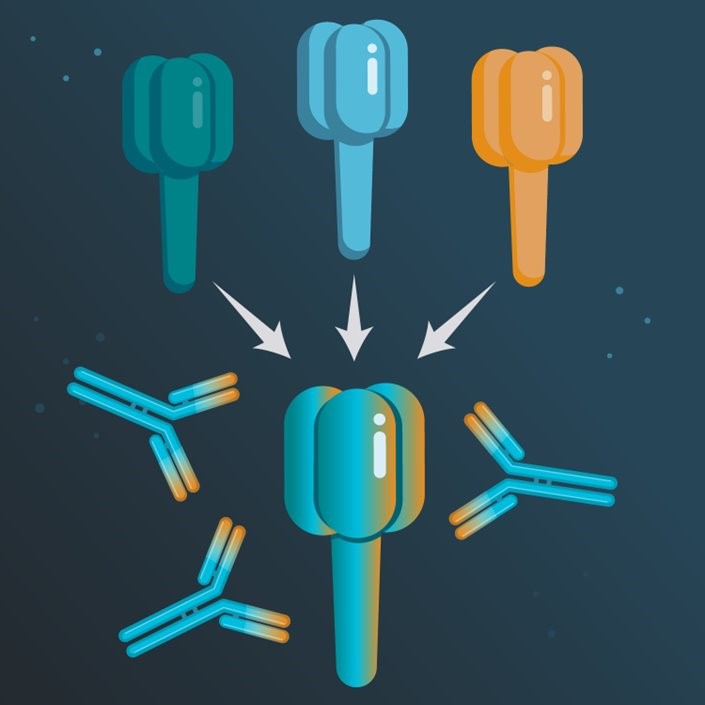
The Ross group has been working on the COBRA methodology for nearly twenty years. These antigens were first conceived to anticipate and prepare for novel influenza virus outbreaks, particularly H5N1; later, their design and use were expanded to seasonal influenza viruses. Though Dr. Ross and collaborators generated a few prototypes at the time, there was no clear path to move these vaccines forward for manufacturing and clinical use. The CIVICs Program provided a pipeline to do just that. “CIVICs has forced us to think more like a manufacturing product development company than just wanting to know the science of what’s going on. We’re much more educated today than we were seven years ago,” says Dr. Ross.
According to Dr. Allen, CIVICs also “allowed us to generate a plethora of pre-clinical data. And I think, from where we started to where we are now, we now have a much better understanding of what it takes to bring a vaccine from the bench all the way to a manufactured human grade product.” This pre-clinical data has included generating pre-immune animal models in which subjects are exposed to influenza viruses prior to vaccination. This model more closely mimics human influenza exposure history and provides better insights into how these vaccines may react in humans with multiple vaccination or infection histories. Additionally, structural modeling of antibody binding to COBRAs elucidated where antibodies bind to the antigen and why they’re more broadly reactive. That knowledge is being used to design new COBRAs that are even more effective.
When asked to reflect on CIVICs, Dr. Ross said, “I think one of the biggest advantages of the CIVICs Program has been the integrated network of investigators across multiple institutions, both academic and corporate, and with the government. This Program should be a template for many NIH and other government funded agencies to use because the impact was broader than it could have been if each of these investigators worked alone.” Dr. Allen added, “CIVICs did a great job at moving these candidates forward, but it also provided a lot of great training opportunities for the next generation of scientists. There are a number of people who have gotten Ph.D.’s or advanced degrees based off CIVICs funding. There were travel grants and training grants awarded to individuals to attend conferences and network and grow as scientists.”