CIVICs Vaccine Candidate and Human Challenge Study Capstone Series
The SDMCC is highlighting the vaccine candidates and human challenge studies developed and led by CIVICs to share how the Program’s efforts improved influenza vaccine science and disease outcomes. To read about other candidates and studies, check out the entire CIVICs Vaccine Candidate and Human Challenge Study Capstone Series.
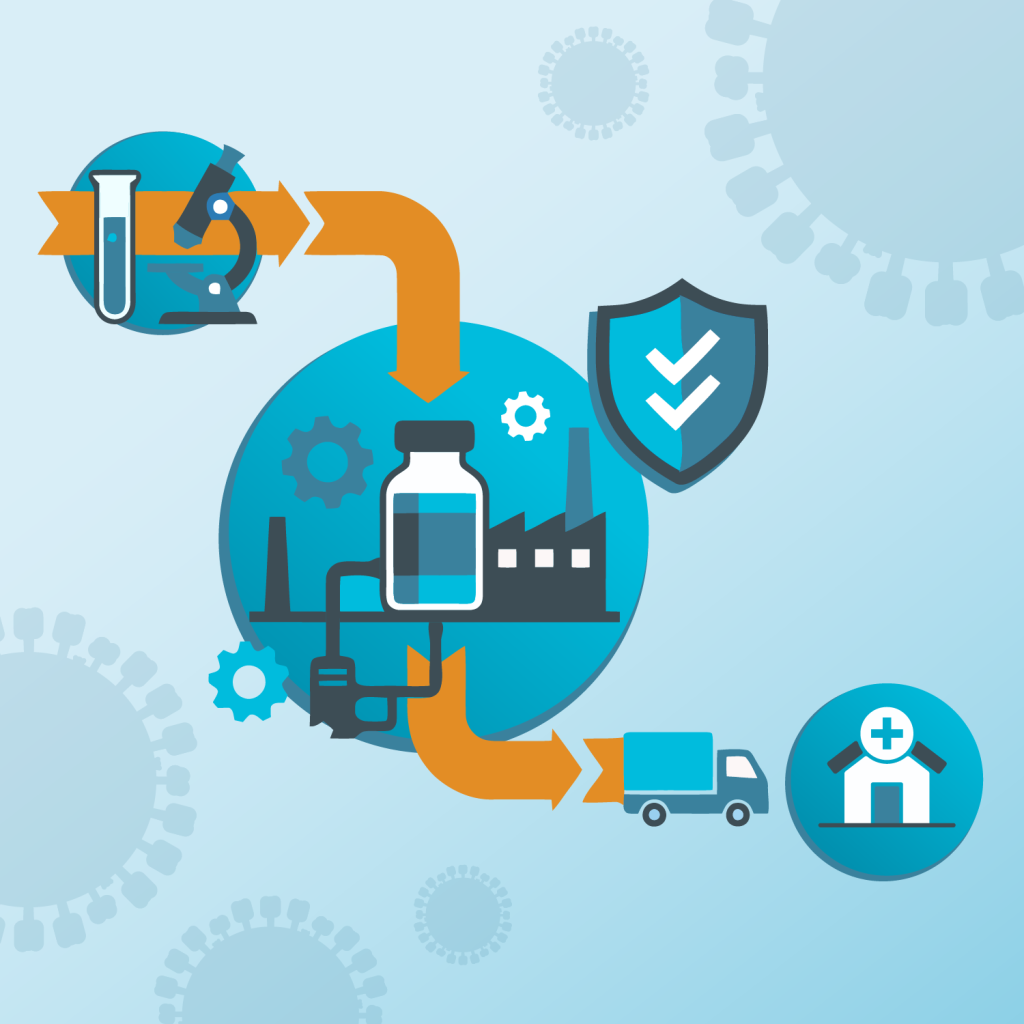
CIVICs championed the design and development of new and innovative influenza vaccines. The Program’s pipeline also relied on practical manufacturing pathways that moved vaccine candidates from the laboratory into the clinic. This effort was led by the Duke Vaccine Manufacturing and Toxicology Core (DVMTC) headed by Thomas Denny, M.Sc., M.Phil. Putting together such a large-scale Program that included exploratory research, process development and manufacturing, and clinical studies was complicated and took extraordinary effort to launch with close collaboration between the Vaccine Centers, Manufacturing Core, Clinical Cores, and NIAID to transition the novel vaccine concepts from bench to bedside.
While traditional vaccine manufacturers typically have production capabilities for one or two vaccine platforms to streamline pipelines and reduce the amount of toxicity studies, “CIVICs was just the opposite,” said Denny. “We had platforms coming at us from every angle.” Each platform had a different level of maturity, different process requirements, and different manufacturing risks. This meant that manufacturing timelines were often unique to each candidate, emphasizing the need for early discussions on manufacturing during the exploratory research phase and the importance of manufacturing capability in determining which scientific ideas progress to clinical candidates.
Despite this complexity, Denny and colleagues made great strides in vaccine manufacturing. CIVICs produced eight mRNA-based influenza vaccine candidates, including two H5 influenza mRNA vaccines, within a four-to-five-month period as part of pandemic preparedness. In addition, there are three mRNA vaccine products in the pipeline for manufacturing within the next few months.
Another area of advancement involved protein-based vaccines. The DVMTC validated several cell lines, each with different features, that serve as a “menu” tailored for protein production. The process development teams successfully executed a full scale down optimization of both the cell culture and non-affinity protein purification platforms. The improved cell culture process now requires much smaller working volumes of only 25-50L to generate sufficient product to support Phase 1/2 clinical trials. This optimization improved overall yield and significantly reduced the cost and cycle time associated with recombinant protein vaccine development and manufacturing.
These complex vaccine development platforms are supported by Duke’s own Analytical Development within the Duke Human Vaccine Institute (DHVI). Most of the analytical methods in the qualified panel used for Current Good Manufacturing Practice (cGMP) testing and lot release are performed at DHVI. Quality oversight is provided by Duke’s independent Office of Regulatory Affairs and Quality (ORAQ), ensuring that all materials meet the rigorous standards required for clinical use. Working together, the Duke cGMP Program has the capacity to advance vaccine concepts to the clinic at speed. The team also stepped up during the COVID-19 pandemic to transition a promising research project to a Phase 1 clinical drug product utilizing a ferritin nanoparticle platform.
Summarizing his thoughts on the Program, Denny said, “I think CIVICs was an important Program that was conceived many years ago to help bring forward a new generation of influenza vaccines. The development of novel processes for manufacturing of CIVICs products required multi-talented people with diverse skills and also served as an excellent platform for providing valuable experience for emerging leaders in biomedical manufacturing. Were we completely successful in every venture attempted? No, few programs are. But I think we’ve all learned a lot from the process. … I would say that we’re grateful to have been part of the CIVICs Program.”